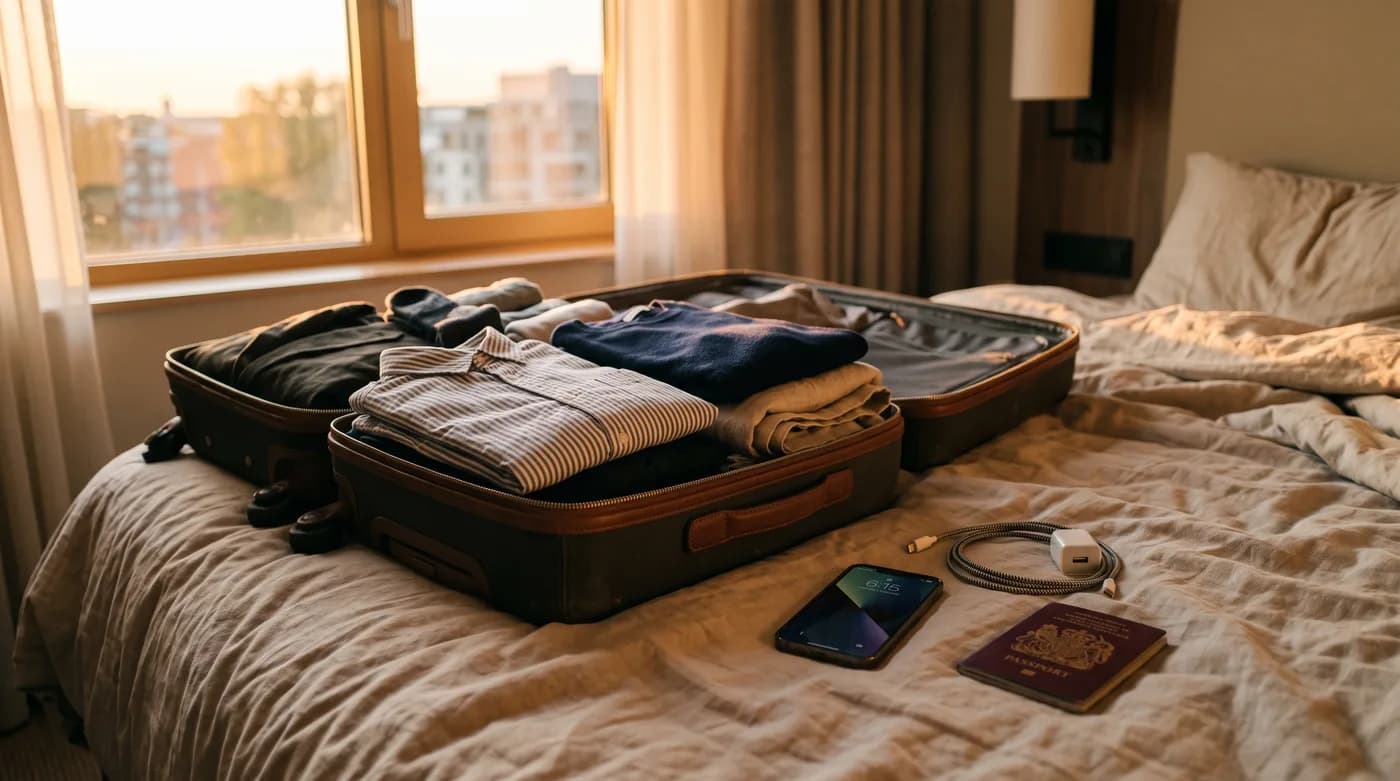
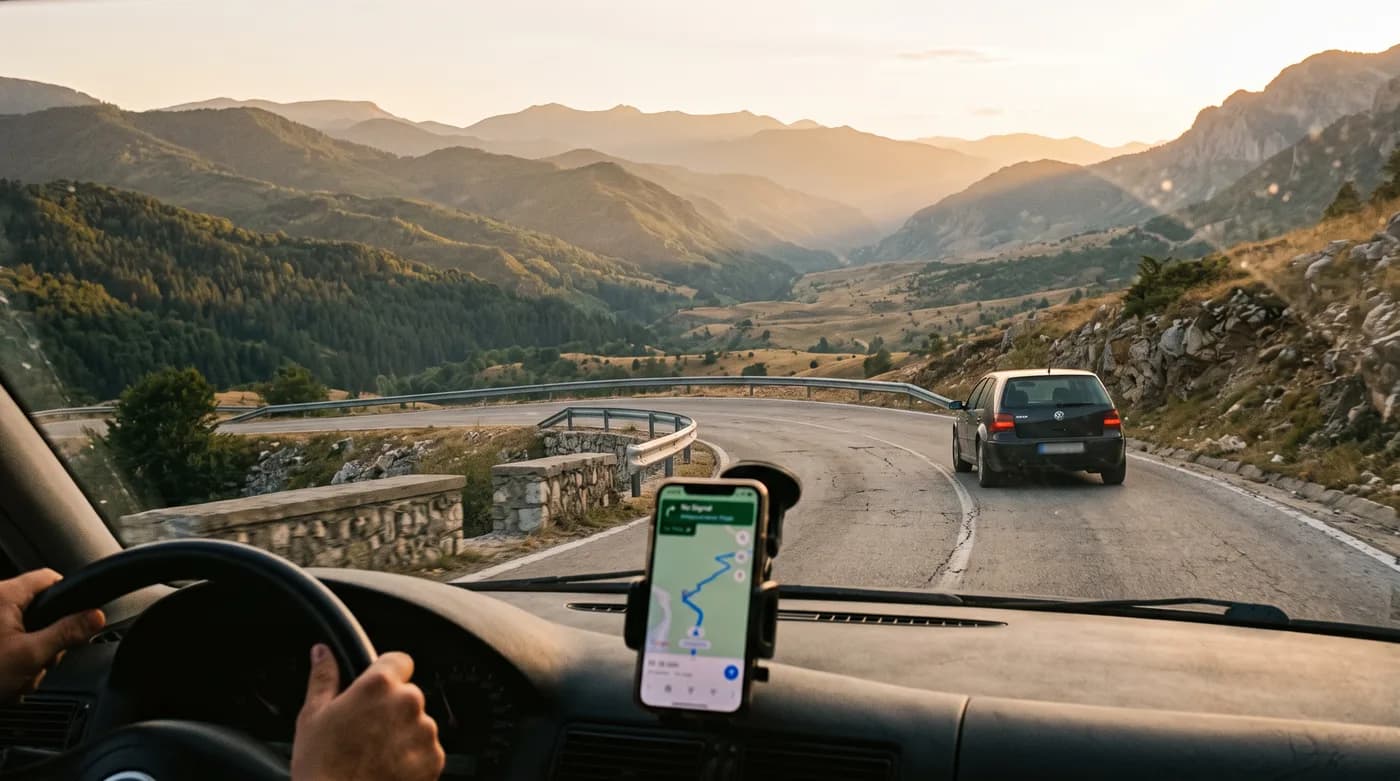
Island hopping in Greece is the kind of trip that changes plan twice a day. A ferry gets cancelled, a room gets rebooked, someone finds a better beach two villages over. All of that runs through a phone, which makes coverage less of a convenience and more of a logistics tool.
Here is what to expect and how to prepare.
Coverage on the islands
The islands are well covered. Greek tourism depends on it, and Cosmote, Vodafone GR and Nova all reach the major ones. Your phone selects the strongest network on its own and switches when the signal weakens, so there is nothing to configure.
Where it thins out is predictable: remote bays, mountain villages, the far end of a hiking trail. That happens with a local SIM too. It is geography, not a plan limitation.
Coverage on ferries
This is the part people are surprised by. Near the coast and in port the signal is normal. Mid crossing, especially on longer routes out to the Cyclades, coverage can disappear for long stretches, because land networks do not reach far out to sea.
The practical response is simple: before boarding, download whatever you will need. Tickets, the accommodation address, the offline map of the island you are heading to. Do not plan to book anything from the middle of the Aegean.
How much data for a week
Estimating data is where most people go wrong in both directions. Some buy 1 GB and run out on day three; others buy 20 GB and use a fifth of it.
Realistic daily figures:
- maps, messaging and email: 100 to 200 MB
- plus social scrolling: 300 to 500 MB
- plus video calls and short clips: 700 MB to 1.2 GB
In plan terms: a long weekend fits in 1 GB, a week of holiday in 3 to 5 GB, and two weeks or a shared connection in 10 GB.
Two settings make a bigger difference than the plan size. Turn off video autoplay in social apps, and set photo backup to Wi-Fi only. Between them they routinely account for half of what people use.
Install before you fly
Downloading an eSIM profile requires internet. If you wait until you land, you need data to get data, which is a bad place to start a holiday.
Install at home on Wi-Fi, a day or two ahead. Validity does not start on installation. It starts when the profile first connects to a Greek network, so installing early costs nothing.
The one setting everyone gets wrong
Data roaming must be on for the eSIM line.
It feels backwards, because the whole point was to avoid roaming charges. But technically the profile connects as a guest on a local network, and the phone classes that as roaming. With it off, nothing works.
At the same time, turn data roaming off for your own SIM. Then nothing can leak through your home operator while your number keeps receiving calls and texts.
What happens to your number
Nothing. Your physical SIM stays in the phone. Calls, texts and bank verification codes keep arriving on your own number. WhatsApp, Viber, Telegram and Signal are tied to the number rather than the card, so they work exactly as before, just over eSIM data.
The only thing that changes is which line carries mobile data.
A short pre-trip list
- Check your phone supports eSIM and is carrier unlocked.
- Buy the plan and install the profile at home.
- Download offline maps for the islands you are visiting.
- Turn off video autoplay and cloud photo backup on mobile data.
- On arrival: data on the eSIM line, roaming on for it, roaming off for your own SIM.
Five minutes before you leave, and the ferry schedule becomes the only unpredictable thing about the trip.
Topics
- greece
- islands
- ferry
- esim