1 GB of data, valid for 7 days
€2.99
Destination eSIM
Stay connected from the moment you arrive in Tunisia. No roaming, no local SIM.
Choose your data and number of days. The price you see is the final price.
The same plans, lined up side by side.
| Data | Validity | Networks | 5G | Hotspot | Price | Buy |
|---|---|---|---|---|---|---|
| 1 GB | 7 days | Ooredoo Tunisia · Tunisie Telecom · Orange Tunisie | no | yes | €2.99 | Buy 1 GB / 7 days |
| 3 GB | 7 days | Ooredoo Tunisia · Tunisie Telecom · Orange Tunisie | no | yes | €5.49 | Buy 3 GB / 7 days |
| 3 GB | 15 days | Ooredoo Tunisia · Tunisie Telecom · Orange Tunisie | no | yes | €5.99 | Buy 3 GB / 15 days |
| 5 GB | 15 days | Ooredoo Tunisia · Tunisie Telecom · Orange Tunisie | no | yes | €8.49 | Buy 5 GB / 15 days |
| 5 GB | 30 days | Ooredoo Tunisia · Tunisie Telecom · Orange Tunisie | no | yes | €9.99 | Buy 5 GB / 30 days |
| 10 GB | 15 days | Ooredoo Tunisia · Tunisie Telecom · Orange Tunisie | no | yes | €12.99 | Buy 10 GB / 15 days |
| 10 GB | 30 days | Ooredoo Tunisia · Tunisie Telecom · Orange Tunisie | no | yes | €15.49 | Buy 10 GB / 30 days |
| 20 GB | 30 days | Ooredoo Tunisia · Tunisie Telecom · Orange Tunisie | no | yes | €23.99 | Buy 20 GB / 30 days |
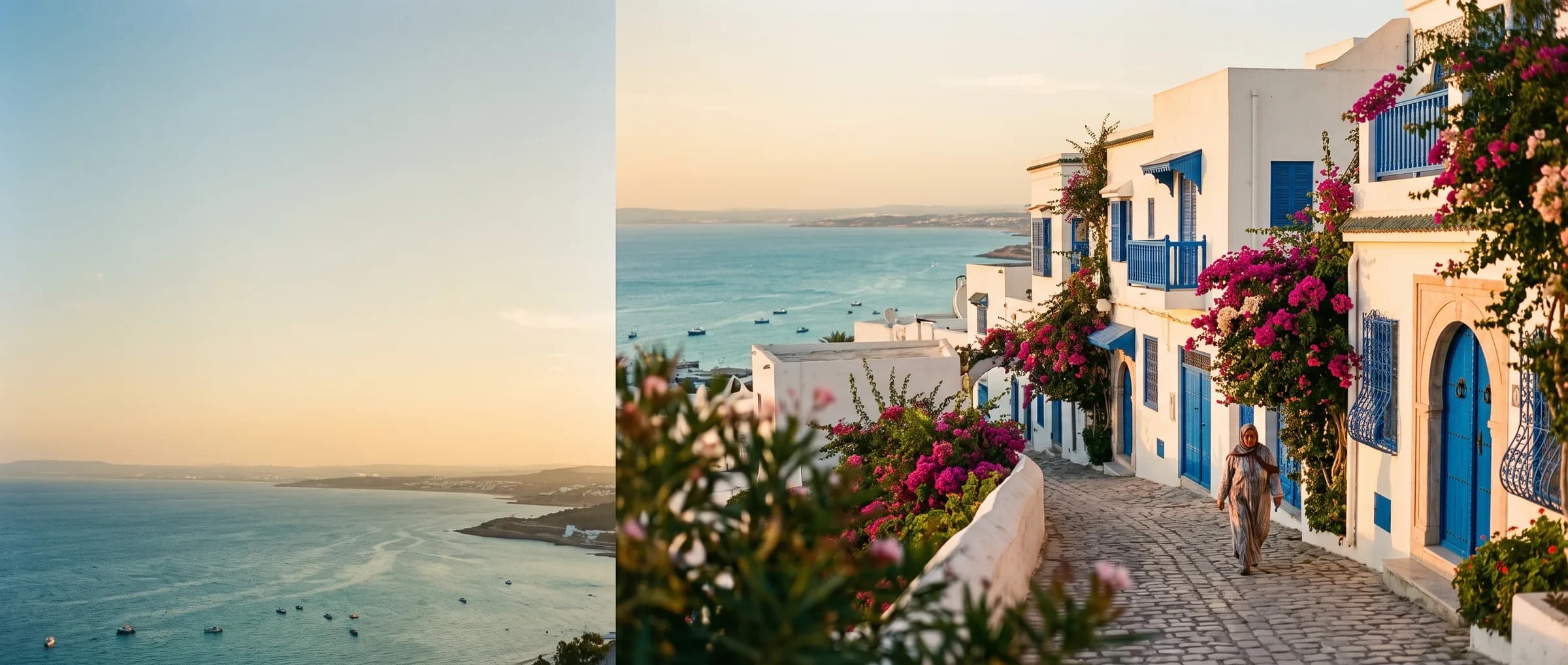
Tunis, Sousse and Djerba are the classic summer holiday, and Sahara excursions take a full day.
If the trip covers more than one country, look at the regional plan too. For a single destination the Tunisia plan is normally cheaper, but the moment you cross a second border the regional plan wins.
Consumption depends on what you do, not on where you are. A typical day looks like this:
| What you are doing | Roughly per day |
|---|---|
| Maps, messaging, email | 100 to 200 MB |
| Plus Instagram and scrolling | 300 to 500 MB |
| Plus video calls and short clips | 700 MB to 1.2 GB |
| Laptop tethered for work | 1.5 GB and up |
In practice: a long weekend in Tunisia fits into 1 GB, a week of holiday into 3 to 5 GB, and two weeks or a shared connection into 10 GB. The largest plan goes up to 20 GB.
The three biggest consumers: autoplaying video inside apps, photo backup to the cloud, and tethering a laptop. Turn off video autoplay and leave photo backup for Wi-Fi and the same plan lasts noticeably longer.
If you do run out, most plans can be topped up from your account, with no reinstall and no new QR code.
In Tunisia the eSIM connects to Ooredoo Tunisia, Orange Tunisie and Tunisie Telecom. Ooredoo Tunisia takes priority, and the phone switches to another network as soon as the signal weakens.
The networks run on 4G, which is plenty for maps, messaging, social and video calls. Save large downloads for Wi-Fi.
You never pick a network manually. The phone finds the partner with the best signal, exactly as it would when roaming on your own number.
Networks we use
The network is selected automatically, based on the signal where you are.
Installing and activating are two different things, and that is the single most useful thing to understand.
Installing means downloading the profile onto the phone. Done once, on Wi-Fi, in a couple of minutes.
Activating is the moment the profile first connects to a network in Tunisia. Only then does the validity clock start.
The practical order:
If it does not connect straight away, toggle airplane mode on and off. That fixes nine cases out of ten. Install before you travel: downloading the profile needs internet, which is exactly what you do not have in arrivals.
Tip: save the QR code and the manual entry details before you leave. The same QR cannot be installed twice, but the manual details help support if something goes wrong on the road.
You do, and that is the whole point of an eSIM. The profile is an extra line in the phone, not a replacement for your card.
Back home you reverse it: mobile data goes back to the home SIM. The eSIM profile can stay in the phone for next time, or you can delete it.
Coverage follows our local partner networks in Tunisia. Signal is strongest in cities and tourist areas, as you would expect.
Most phones newer than 2019 do, including iPhone XR and later, Samsung Galaxy S20 and later, and Google Pixel from the third generation. The phone must be carrier unlocked. You can check your exact model on our device checker page.
Install it at home on Wi-Fi, a day or two before you travel. Validity only starts when the profile first connects to a network in Tunisia, so installing early costs you nothing.
Yes. The physical SIM stays in the phone, your number keeps receiving calls and texts, and WhatsApp works on the same number because it is tied to the number rather than to the card.
Maps, messaging and email fit into about 1 GB a week. Add social media and you want 3 to 5 GB. Tether a laptop or watch video and you want 10 GB.
Yes, hotspot works on every plan. Keep in mind a laptop consumes several times faster than a phone.
Data stops but the profile stays in the phone. Most plans can be topped up from your account, with no reinstall and no new QR code.
No, this is a data-only plan. Calls and texts stay on your home SIM, while calls through apps work normally over eSIM data.
You connect to Ooredoo Tunisia, Orange Tunisie and Tunisie Telecom. The phone picks the strongest signal on its own, exactly as it does when roaming.
As far as the larger towns, yes. Deeper into the desert there is no signal on any network, so download maps offline.